How to Write a Book: The Ultimate Step-by-Step Guide

Featured Posts

Key Takeaways:
- Writing a book starts with a clear idea and a strong purpose that keeps you motivated throughout the journey.
- Breaking the process into small steps like outlining, drafting, and revising makes writing a book more manageable.
- A consistent writing routine helps you make steady progress, even if you write only a little each day.
- The first draft doesn’t need to be perfect focus on completing it, then improve during revision.
- Feedback and professional editing play a crucial role in refining your manuscript and making it publish-ready.
- Choosing between traditional publishing and self-publishing depends on your goals, control preferences, and resources.
Writing a book starts with a clear idea and a strong purpose that keeps you motivated throughout the journey.
Breaking the process into small steps like outlining, drafting, and revising makes writing a book more manageable.
A consistent writing routine helps you make steady progress, even if you write only a little each day.
The first draft doesn’t need to be perfect focus on completing it, then improve during revision.
Feedback and professional editing play a crucial role in refining your manuscript and making it publish-ready.
Choosing between traditional publishing and self-publishing depends on your goals, control preferences, and resources.
Everyone has a story inside them. Some dream of telling their life journey, while others want to share knowledge or create worlds of imagination. Learning how to write a book may seem like a mountain that is too high to climb, but it becomes possible with the right steps and steady focus.
This guide will walk you through the entire process. You will learn how to turn an idea into a finished manuscript and set yourself up for success.
How to Write a Book
Writing a book involves starting with a clear idea, creating an outline, building a consistent writing routine, completing a first draft without focusing on perfection, revising and editing your work, gathering feedback, and choosing the right publishing method. Consistency and persistence are the keys to finishing your manuscript.
Convert ordinary objects or routines into extraordinary experiences. A pencil might draw by itself, a sock can hide a tiny world, or a lunchbox could carry secret treasures.
Why People Want to Write a Book
Books inspire, teach, and entertain people living in the same world as you. Some people write because they want to leave a legacy. Others write to teach skills or build authority in their field. Many choose storytelling as a way to connect with readers on an emotional level. Writing a book is a powerful act of communication, whatever the reason.
Finding the Spark for Your Idea
Every book begins with an idea. But ideas rarely arrive fully formed. Start by asking yourself what matters most to you. Do you want to share personal experiences, craft fiction, or provide practical advice?
Keep a notebook to capture thoughts, images, and lines that come to mind during the day. When something excites you enough to keep thinking about it, that’s a sign it may grow into a book. Small details really matter, that’s why knowing how to write a book is essential.
Steps of Writing a Book
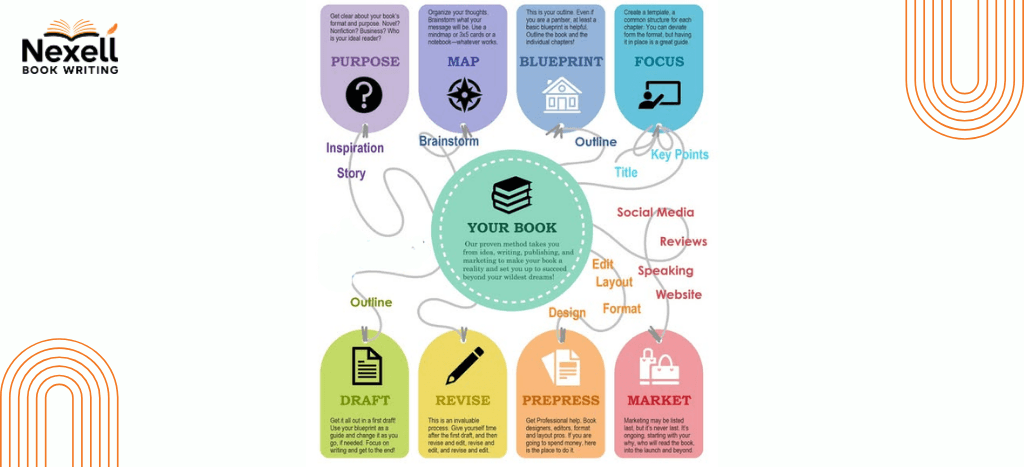
Let’s break the process into clear, manageable parts. By following the steps of writing a book, you’ll move from vague ideas to a structured plan that carries you all the way to completion.
- Clarify your purpose: Decide why you want to write. Your purpose will keep you motivated.
- Define your audience: Know who will read your book. Writing for children is different from writing for professionals.
- Choose your genre: Each genre has its own expectations, fiction, nonfiction, memoir, or self-help.
- Outline your structure: Map out the main points, chapters, or story beats before you start drafting.
- Set realistic goals: Break the work into small, daily targets to avoid feeling overwhelmed.
- Write your first draft: Don’t aim for perfection. Just get words on the page.
- Revise and edit: Improve flow, cut unnecessary parts, and refine your message.
- Seek feedback: Share your work with trusted readers or editors.
- Polish your manuscript: Correct grammar, spelling, and formatting.
Outlining Your Book
An outline saves you from getting lost halfway through. Start with a broad structure. If you’re writing nonfiction, list the main subjects you want to cover. If you’re writing fiction, sketch the beginning, middle, and end of the story. Expand each section with more details until you have a roadmap.
Building a Writing Routine
Books don’t appear overnight. They grow word by word. Set aside dedicated time every day or week. Treat writing like an appointment you can’t miss. Even short sessions add up over time. A steady routine of writing a book creates progress and reduces the risk of giving up.
Drafting Without Fear
Children naturally relate to friendships. Stories focusing on cooperation, loyalty, and understanding resonate deeply.
- Show how conflicts are solved through communication.
- Include diverse characters to reflect real-life relationships.
- Keep lessons subtle rather than preachy.
These children’s book ideas so far encourage social learning while remaining entertaining, which is necessary for the positive growth of young minds.
Revising Your Work
Take a break before revising once you finish your draft. Returning with fresh eyes helps you notice weak spots. Remove anything that feels unnecessary. Strengthen unclear ideas. Ensure each chapter serves your overall goal. Revision is where your book truly takes shape.
The Role of Feedback
Outside perspectives matter. Share your manuscript with people who will be honest. They may notice gaps or confusing parts you overlooked. Listen carefully, but also trust your instincts. Not every suggestion needs to be followed. Choose what aligns with your vision.
✍️ Ready to Turn Your Book Idea into Reality?
Writing a book can feel overwhelming, but you don’t have to do it alone. At Nexell Book Writing, we guide you through every step— from outlining your ideas to polishing your final manuscript—so you can bring your story to life with confidence.
Professional Editing
Every writer benefits from editing. A skilled editor catches grammar mistakes, improves sentence flow, and ensures that your work feels professional. This step may cost money, but it makes your book stronger. Think of it as an investment in quality.
How to Publish Your Book
Once your manuscript is ready, publishing decisions come next. Two main paths exist:
- Traditional publishing: You submit your work to agents or publishers. They handle printing, marketing, and distribution, but competition is tough.
- Self-publishing: You control the process through platforms like Amazon Kindle Direct Publishing. It requires more work on your end, but gives full creative freedom.
If your goal is to publish for children, the process is the same. The main difference lies in the illustrations. Children’s books often need artwork, so you may need to collaborate with an illustrator. And if your target audience is grown-ups, then a graphic designer who can create something relatable and creative is needed.
Best Tips for Writing a Book
Here are some specific suggestions for the focus of your readers:
- Use simple and clear language with emotions.
- Keep stories short and engaging, and relatable.
- Choose familiar characters that people can understand.
- Give your story a purpose. Something that grabs people’s minds.
Staying Motivated Through Challenges
Doubt and frustration are part of the process of writing a book. Many writers stop halfway. To keep going, remember why you started. Celebrate small wins, like finishing a chapter. Stay connected with writing groups or communities for support. Your progress may be slow, but persistence leads to results.
Why Books Matter
Books influence people long after they are written. They educate, inspire, and entertain across generations. You add your voice to this long tradition by finishing your manuscript. The effort you put in today can shape readers’ lives tomorrow.6
Practical Advice for Saving Time
- Write with focus and turn off distractions.
- Use simple tools like word processors or writing apps.
- Track progress with word count goals.
- Don’t wait for inspiration. Start even when you don’t feel ready.
Final Thoughts
Learning how to write a book is about more than writing words on a page. It’s about discipline, vision, and the courage to share your thoughts with others. If you are willing to follow the right steps and embrace revision, you can finish a manuscript.
The path is open to you, whether you dream of storytelling or nonfiction. Take the first step today, and keep moving until you hold your completed book in your hands.
FAQ's
It depends on your schedule and consistency. Many beginners take several months to a year to complete a first draft.
The first step is clarifying your purpose and identifying your main idea.
An outline is highly recommended because it keeps your writing focused and organized.
Yes, self-publishing platforms allow you to publish your book independently.
Set small goals, build a routine, and remind yourself why you started.
Let's Connect With Our Experts
Get valuable consultation form our professionals to discuss your projects. We are here to help you with all of your queries.
Revolutionize Your Business
Collaborate with us and become a trendsetter through our innovative approach.