Book Editing vs Proofreading: What Your Manuscript Actually Needs

Featured Posts
Key Takeaways:
- Editing and proofreading are not interchangeable editing fixes structure and clarity; proofreading fixes surface errors.
- Editing has three common layers: developmental editing, line editing, and copyediting.
- Proofreading is always the last step, performed after all structural edits and formatting are finished.
- Skipping editing and going straight to proofreading leaves deeper structural issues unresolved.
- Professional editing protects an author's credibility, reviews, and long-term sales.
- Payment structures include full project fee, per milestone, per word, and retainer. Milestone-based is the most common and recommended for books.
Quick Answer: Book editing and proofreading are two different stages of manuscript preparation. Editing which includes developmental editing, line editing, and copyediting improves a manuscript’s structure, clarity, pacing, and language at a deep level. Proofreading is the final, surface-level check for spelling, punctuation, formatting, and typographical errors that happens only after editing is complete. Most manuscripts need both: editing first to strengthen the book, then proofreading to protect it before publication.
When you have spent months or maybe even years writing a book, the last thing you want is to rush the final stage. This is where many writers get confused. They hear terms like editing, proofreading, copyediting, and line editing and assume they all mean the same thing. They also think a quick proofread is enough to fix everything.
The truth is, understanding book editing vs proofreading can make the difference between a manuscript that feels amateur and one that reads as it belongs on a bookstore shelf. If you are not sure about what your manuscript really needs, you are not the only one. Many authors struggle with this exact question.
Let’s break it down in a clear way so you can confidently decide what stage your book is in and what kind of professional help will actually move it forward.
What Is Book Editing?
Definition: Book editing is the process of improving a manuscript’s structure, clarity, pacing, tone, and language so it reads professionally and engages readers, typically performed in stages: developmental editing, line editing, and copyediting.
Editing is not just fixing typos. It’s about shaping your manuscript into the strongest version of itself.
When people ask, “What Is Book Editing?”, they’re often surprised to learn that it goes far beyond correcting grammar. Book editing looks at the structure, clarity, pacing, tone, character development, and overall flow of your work. Depending on the level of editing, it can involve deep revisions or more focused refinements.
There are typically a few layers:
Developmental Editing
This is the big-picture stage. An editor looks at your story structure, argument strength, character arcs, plot holes, pacing issues, and overall coherence. If chapters need to be rearranged or sections feel underdeveloped, this is where those changes happen.
For example, a developmental editor might say:
- Your middle chapters lose tension.
- The protagonist’s motivation isn’t clear.
- The argument in chapter three contradicts chapter five.
- The ending feels rushed.
It can feel intense, but it’s transformative.
✍️ Not Sure What Stage Your Manuscript Is At?
Every manuscript is different, and guessing which editing stage you need can cost you time and money. Get a professional assessment that tells you exactly what your book needs next before you spend a dollar.
Line Editing
Line editing focuses on how your writing sounds and flows sentence by sentence. It sharpens language, removes repetition, improves clarity, and strengthens emotional impact. If your sentences feel awkward or overly wordy, a line editor helps refine them without losing your voice.
Copyediting
Copyediting sits between editing and proofreading. It addresses grammar, punctuation, consistency, formatting, and technical accuracy. It ensures your manuscript follows standard language rules while maintaining consistency in spelling, capitalization, and style.
Editing Layer | Primary Focus | Typical Output |
Developmental Editing | Structure, plot, argument strength, pacing | Restructured chapters, revised character arcs |
Line Editing | Sentence flow, tone, word choice, emotional impact | Sharper, clearer sentences in the author’s voice |
Copyediting | Grammar, punctuation, consistency, formatting | Technically clean, style-consistent manuscript |
Proofreading | Typos, spelling, spacing, final formatting | Publication-ready manuscript |
When authors search for book editing services USA, they’re usually looking for a professional who can guide them through one or more of these stages. A strong editor doesn’t rewrite your book for you. They elevate what’s already there. They respect your voice while making sure readers experience the story without distraction.
If your manuscript still feels rough, uneven, confusing in places, or structurally shaky, you likely need editing, not just proofreading.
What Is Proofreading?
Proofreading is the final polish. It happens after editing is complete. If editing is renovation, proofreading is the final inspection before handing over the keys. When someone asks, “What Is Proofreading?”, the simplest answer is this: proofreading catches surface-level errors before publication. It focuses on:
- Spelling mistakes
- Missing or misplaced punctuation
- Formatting inconsistencies
- Minor grammar slips
- Typographical errors
- Extra spaces or repeated words
Definition: Book editing is the process of improving a manuscript’s structure, clarity, pacing, tone, and language so it reads professionally and engages readers, typically performed in stages: developmental editing, line editing, and copyediting.
A proofreader is not analyzing your plot structure or suggesting chapter rewrites. They are making sure the finished manuscript is clean and professional.
This stage usually happens after:
- All structural edits are done
- The manuscript has been formatted
- You’re preparing for print or digital release
Think of proofreading as quality control. It ensures that no small mistake undermines the credibility of your book.
Here’s where authors often go wrong in the book editing vs proofreading debate: they assume proofreading will fix everything. It won’t.
If your story has pacing issues, weak arguments, or unclear sections, a proofreader won’t rewrite those parts. They aren’t there to reshape content. They’re there to correct technical errors.
Skipping editing and jumping straight to proofreading is like painting over cracked walls. It might look fine at a glance, but the deeper issues are still there.
Book Editing vs Proofreading: How to Know What You Need
Now that you understand both processes, the real question becomes: what does your manuscript need right now?
Here are a few honest checkpoints:
You likely need editing if:
- Beta readers say parts are confusing.
- The pacing feels inconsistent.
- You are unsure about your structure.
- You suspect repetition or weak sections.
- You have revised multiple times, but something still feels off.
You likely need proofreading if:
- The structure is finalized.
- Professional editing has already been completed.
- You are preparing for publication.
- You just need a final grammar and typo check.
Ask: Is my manuscript’s story structure, argument, or pacing still uncertain? If yes → start with developmental editing. If the structure is solid but sentences feel weak or repetitive → start with line editing. If the writing is strong but needs technical polish → start with copyediting. If everything above is already done → move to proofreading.
Many first-time authors underestimate how important editing is. They assume that once the story is written, it’s done. But writing and editing are two different skills. Even seasoned authors rely heavily on editors to sharpen their work.
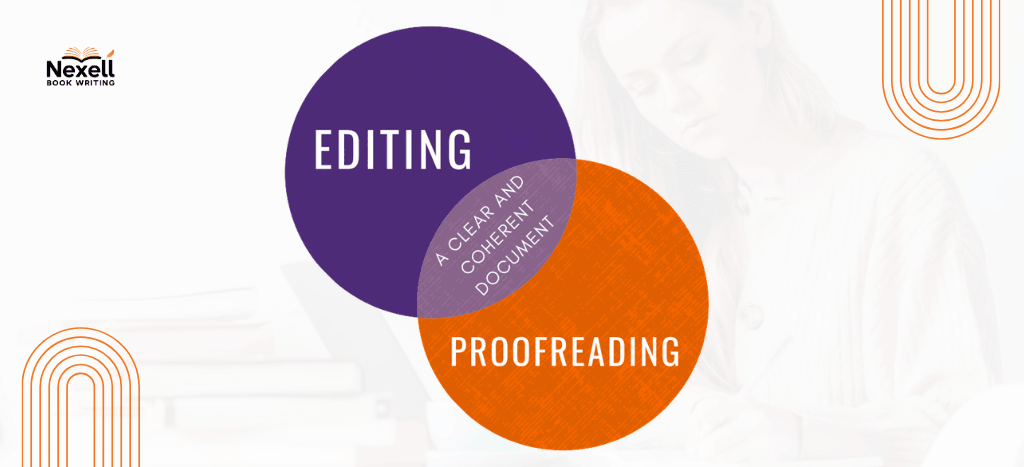
When comparing book editing vs proofreading, it’s not about choosing one over the other. In most cases, you will need both at different stages.
Editing strengthens the manuscript. Proofreading protects it.
Why Professional Editing Matters
There is a reason traditional publishing houses invest heavily in editing teams. Readers may not consciously notice strong editing, but they absolutely notice weak writing.
A poorly edited book can result in:
- Negative reviews
- Reduced credibility
- Lost reader trust
- Lower sales
- A damaged author’s reputation
On the other hand, a professionally edited manuscript:
- Reads smoothly
- Maintains consistent tone
- Keeps readers engaged
- Reflects professionalism
- Competes confidently in the marketplace
For authors looking into book editing services USA, the goal isn’t just correction, it’s positioning. In a competitive market, your book needs to meet industry standards.
Strong editing isn’t about changing your story. It’s about making sure readers experience it exactly the way you intended.
Common Misconceptions About Editing and Proofreading
There are a few myths that continue to circulate among writers.
Spellcheck doesn’t catch context errors or structural weaknesses. It won’t fix pacing problems or character inconsistencies.
Casual feedback is helpful, but professional editors are trained to identify patterns, structural concerns, and industry-level standards.
Poor reviews and lost readers are more expensive in the long run. A well-edited book is an investment in your brand as an author.
Proofreading and editing are related but fundamentally different stages. Confusing them can lead to skipping necessary improvements.
Understanding book editing vs proofreading protects you from these costly mistakes.
How Nexell Book Writing Helps Authors Polish Their Manuscripts
Writing a book is deeply personal. Letting someone edit it can feel vulnerable. That’s why working with a professional team matters.
How Nexell Book Writing Helps Authors Polish Their Manuscripts comes down to structured support and clarity at every stage.
First, they assess your manuscript to determine what level of editing is actually needed. Not every book requires heavy developmental edits. Some need line refinement. Others simply require a final proofread. The key is accurate assessment.
Second, their team understands the expectations of the U.S. publishing market. For authors searching for book editing services USA, working with professionals who know industry standards ensures your manuscript aligns with what readers expect.
Third, Nexell focuses on preserving your voice. A common fear among writers is that editing will strip away personality. Instead, skilled editors enhance clarity while keeping your tone intact.
Finally, their proofreading process ensures that once editing is complete, your manuscript is publication-ready. From grammar accuracy to formatting consistency, the final polish matters.
Authors don’t just receive corrections. They gain confidence. And that confidence shows when the book reaches readers.
The Final Decision
If you are still deciding between book editing vs proofreading, ask yourself one honest question: Is my manuscript structurally strong and fully refined or does it still need work?
If it needs shaping, invest in editing first. If it’s fully developed and simply needs a final technical review, proofreading is your next step. Most successful books go through multiple rounds of editing before reaching the proofreading stage. That’s normal. It’s not a sign of weakness in your writing. It’s part of the professional publishing process. Your manuscript deserves more than a rushed finish. It deserves thoughtful refinement.
Readers don’t care how long it took to edit your book at the end of the day. They care about how it feels to read it.
✍️ Give Your Book the Finish It Deserves
Whether your manuscript needs deep structural editing or a final proofread, our team will map out the exact path to a publication-ready book. No guesswork, no wasted rounds.
Ready to invest in your story? Contact Nexell Book Writing for a free, no-obligation consultation. Our expert team reviews your project, answers all questions about ghostwriter costs, and provides a personalized quote. 250+ authors have trusted us yours could be next.
Call (512) 768-0329 or visit nexellbookwriting.com
FAQ's
Book editing improves structure, clarity, pacing, and language at a deep level, while proofreading is a final, surface-level check for spelling, punctuation, and formatting errors performed after editing is complete.
Yes. Most manuscripts need editing first to strengthen structure and language, followed by proofreading as a final quality-control step before publication.
A developmental editor reviews the big-picture elements of a manuscript, including structure, character arcs, pacing, plot holes, and argument strength, and recommends or makes structural changes.
a 25–50% premium.
Line editing refines a manuscript sentence by sentence, sharpening language, removing repetition, and improving clarity and emotional impact while preserving the author’s voice.
Copyediting addresses grammar, punctuation, consistency, and formatting before the manuscript is finalized, while proofreading is the very last check performed after all editing and formatting are done.
No. Proofreading only corrects surface-level errors like typos and punctuation; it does not address pacing, plot, or structural issues, which require editing.
Editing should start once you have a complete draft, ideally after getting feedback from beta readers, and well before you move into formatting or proofreading.
Let's Connect With Our Experts
Get valuable consultation form our professionals to discuss your projects. We are here to help you with all of your queries.
Revolutionize Your Business
Collaborate with us and become a trendsetter through our innovative approach.